You once told your husband, "As a woman, I regret that I have no public accomplishments to be remembered by in this world. I would rather die early and have my father write a few lines for my epitaph."
—Kim Chang-hyup, Epitaph for My Late Daughter, Wife of the Oh Clan
This is an excerpt from an epitaph written by Kim Chang-hyup for his late daughter. Written in Classical Sinograph and approximately 2,000 characters long, the original inscribed epitaph was buried inside her grave, while a copy remains in Kim Chang-hyup's collected works, known as the Collection of Writings by Nongam (art name of Kim). In Korea, graves traditionally featured a tombstone inscribed with the deceased's social position and an epitaph containing verses mourning the deceased a biographical account written by a learned family member or even prominent writers from outside the family. In this case, it was the father of the deceased who wrote this epitaph, which makes it particularly personal and heartfelt.
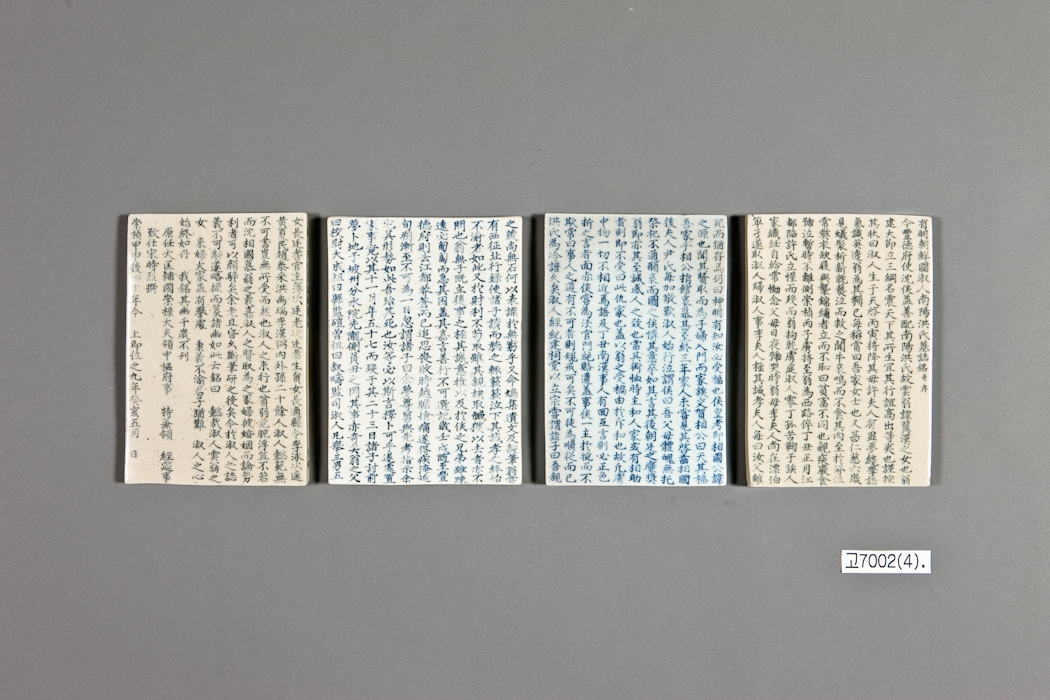
Kim Chang-hyup, born in 1651 to the prominent Andong Kim clan, was a prolific author and distinguished scholar-official. While his family weathered the ups and downs of the late Joseon dynasty and its political turmoil, his personal life remained relatively stable. All six of his brothers were known for their literary talents and intelligence, and he lived happily with his one son and five daughters. However, 1700 proved to be an annus horribilis for Kim. His third daughter, whom he especially cherished for her exceptional intelligence, died shortly after giving birth to a son. This tragic loss was compounded by the subsequent death of her brother—Kim Chang-hyup's only son, Soong-gyum—in whom he had placed such high hopes.
His sorrow was so inconsolable that he had to wait almost six years before he could finally bring himself to write epitaph for his daughter's grave. What finally motivated him to overcome his grief was his daughter's words, which he quotes in her epitaph. When Kim Chang-hyup had once written an epitaph for a young female relative who died early, his daughter, then still alive, had observed, 'This lady has had our father write her epitaph, so her name will be preserved for eternity—her death is not such a misfortune after all.' Kim laments: "If I were to die unexpectedly without writing your epitaph, neither you nor I—father and daughter—could close our eyes peacefully in the grave."
The daughter he portrays in the epitaph is a woman of impeccable virtue and intelligence—so much so that when she married and left home, Kim deeply felt her absence whenever he was reminded of it. This was not merely the sentiment of a loving father; her exceptional qualities were recognized by the male relatives, who were all accomplished scholars and government officials in their own right. As he recalls, "Your great uncle Soo-jeung and uncle Chang-heup enjoyed conversing with you and treated you as a fellow scholar." The epitaph suggests, however, that Kim believed her intelligence went unrecognized by her husband's family: "Since you were not given to flattery or pretense, your in-laws were often oblivious to your virtuous nature." He even confesses, with a hint of irony, that "throughout the seven years you were married into the Oh clan, the family members there—including your husband—never once saw you reading."
Given this context, the desire of Kim Yoon—the daughter of Kim Chang-hyup and one of the few women in Joseon history whose given name is recorded—to be remembered at least through her father's epitaph becomes even more heartbreaking. While literacy among women was not considered necessary in the Joseon dynasty, if not frowned upon, as Jang points out, there were certain women, though extremely few in number, who managed to leave their mark through their own calligraphy, copying works, or even their own collections of writings.* Kim Yoon was denied even these limited opportunities. Despite being not only literate but also considered a highly intellectual woman, she could neither pursue her studies nor establish a legacy in her own right. Consequently, her legacy had to survive through the writings of others about her—yet even this indirect form of remembrance was something she desperately craved.
As the Latin saying goes: Scripta manent, verba volant—written words endure while spoken ones fly away. One is remembered only through writings, and this was especially true for the Kim family in the 18th century. However, even this opportunity was not equally available to both genders. Kim Yoon's personal desire for this modest form of posthumous recognition underscores the profound limitations imposed by both contemporary social norms and her individual circumstances.
*Jang, Ji Yeon, The Untold Korean History: Beyon the Sinographs, Purnyoksa (2023)
'번역 (한국어 > 영어, 불어)' 카테고리의 다른 글
| Hollyhock (0) | 2025.09.10 |
|---|---|
| Pine Mushroom (0) | 2025.09.08 |
| Dumplings (0) | 2025.09.07 |
| The Dooriban Chronicle (1) | 2025.09.07 |